Prehistoric Caveman Font: A Maker's Guide to Prehistoric Design
The morning light hits my desk just right as I open up my design software, ready to tackle a new batch of candle labels for an upcoming "Jurassic Jungle" themed collection. I have the wax poured and the jars lined up, but something feels missing until I scroll through my library and land on Prehistoric Caveman. There it is—that playful, hand-crafted energy that instantly transforms a plain label into a story. As a creator who lives for those little moments when a digital file becomes a tangible product, finding the right typeface is half the battle. This decorative font, created by Darrell Flood, isn't just a set of letters; it is a toolbox of personality waiting to be unleashed on stickers, packaging, and handmade goods.
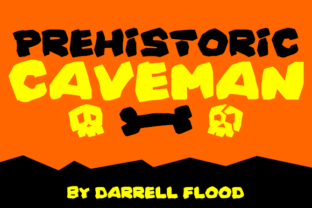
When you first load Prehistoric Caveman, you realize it is far more than a standard alphabet. It captures the whimsical chaos of the Stone Age with a modern, clean execution that makes it incredibly versatile for commercial craft sellers. The visual personality is bold and uneven, mimicking the look of chiseled rock or primitive markings, yet it remains legible enough for product branding. What truly sets this typeface apart for us makers are the special characters. We aren't just talking about punctuation; we are talking about skulls, bones, and other prehistoric glyphs that allow you to build custom logos or decorative dividers without needing separate clipart files. It streamlines the workflow significantly when you are trying to get a listing live before the weekend rush.
Bringing Primitive Charm to Modern Products
I recently used this font to design a series of birthday invitations for a client who wanted a dinosaur theme that felt boutique rather than cartoonish. By pairing Prehistoric Caveman with a clean, geometric sans serif font for the body text, we achieved a perfect balance. The display font handled the "ROAR!" headline with massive character, while the simpler font ensured the party details were easy to read. This is a crucial lesson in font pairing: let the decorative element shine by keeping the supporting cast quiet. Whether you are designing wedding welcome boards with a quirky twist or creating printable wall art for a nursery, understanding where to place this heavy-hitting display font is key.
The applications for this font extend well beyond paper goods. I love testing how these designs translate onto physical merchandise like tote bags and mugs. Because Prehistoric Caveman has such thick strokes and distinct shapes, it holds up beautifully on fabric and ceramic. When using a heat press or sublimation printer, the bold lines ensure that the design doesn't get lost in the texture of the material. For Cricut and Silhouette users, this font is a dream for cutting vinyl decals. The paths are generally clean, meaning less weeding time and fewer torn letters when you are peeling away the excess material for a car decal or a laptop sticker.
Elevating Brand Identity and Packaging
In the world of handmade business, your packaging is your silent salesperson. Using a unique commercial font like Prehistoric Caveman on your hang tags, tissue paper seals, or shipping labels creates immediate brand recognition. Imagine a customer receiving a package sealed with a sticker featuring a cute bone icon and your shop name in this rugged, fun lettering. It adds a layer of thoughtfulness and thematic consistency that generic labels simply cannot match. This attention to detail enhances the perceived quality of your products, making customers feel like they bought something special rather than mass-produced.
However, readability is always a concern with highly stylized decorative fonts. While Prehistoric Caveman is fantastic for short phrases, names, titles, and decorative wording, it is not suitable for long paragraphs of text. If you try to write a whole story in this style, the viewer's eye will fatigue quickly. Instead, reserve it for the hero elements of your design—the product name on a soap label, the date on a calendar, or the main slogan on a t-shirt. For longer descriptions, switch to a readable serif font or a simple handwritten font that complements the rough edges of the caveman style without competing with it.
Practical Tips for Makers and Sellers
Before you start uploading your new designs to Etsy or your personal website, there are a few technical checks every responsible creator should perform. First, always review the specific license included with Prehistoric Caveman. While many of Darrell Flood's creations offer generous terms for personal and commercial use, the rules can vary regarding the number of end products or whether the font file itself can be redistributed in a template. Ensuring you are compliant protects your small business from legal headaches down the road.
Additionally, take the time to explore the full character map. You might discover alternates or ligatures that add extra flair to your logo design or social media graphics. Sometimes, swapping a standard "O" for a skull glyph can turn a boring wordmark into a memorable brand asset. When preparing files for print, especially for small items like jewelry tags or mini stickers, do a test print at 100% scale. Decorative fonts can sometimes lose definition if scaled down too small, so ensure those bone details remain crisp and clear.
Ultimately, incorporating Prehistoric Caveman into your creative arsenal is about adding joy and character to your work. Whether you are crafting seasonal holiday tags, designing a farmhouse-style sign with a prehistoric twist, or putting together a digital planner with a fun theme, this font delivers a specific mood that resonates with buyers looking for something unique. It bridges the gap between professional packaging design and playful creativity, allowing your handmade items to stand out in a crowded marketplace. So, fire up your design software, pick a project, and let your inner caveman create something wild.